
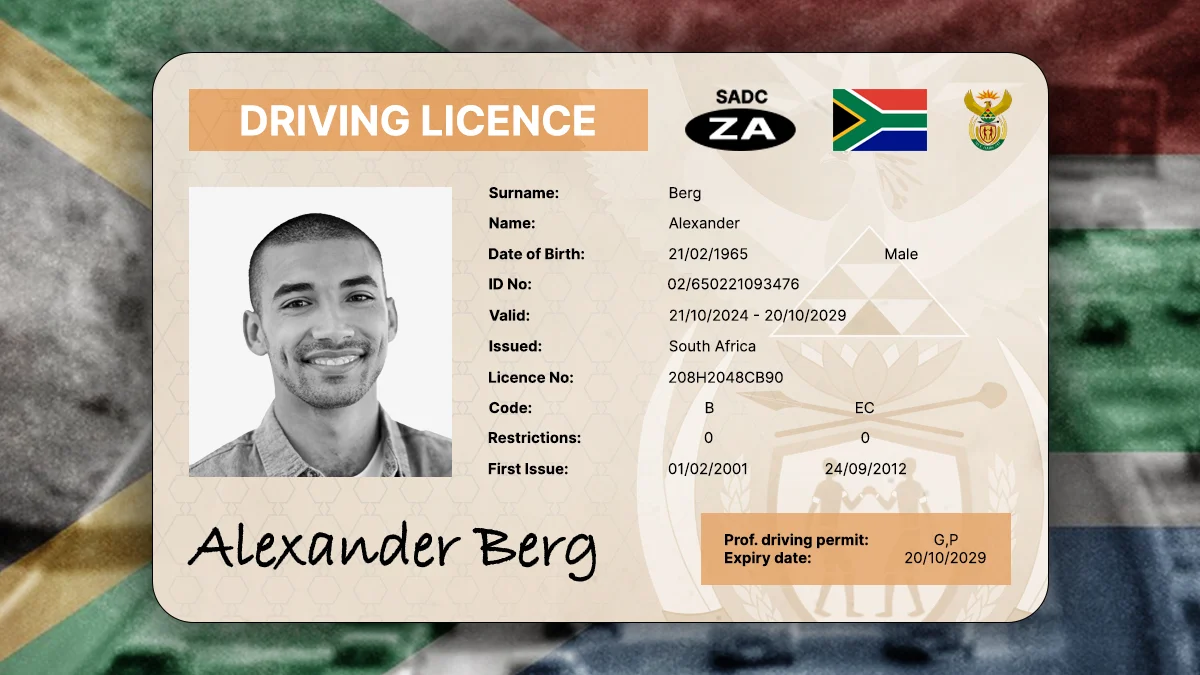
Despite South Africa only having a single breakdown-prone driving licence card printing machine, the South African government is struggling to procure a new one without tripping over its own feet.
Transport minister Barbara Creecy has said that one of the difficulties was that no South African companies were found to have met the necessary driver’s licence printer tender criteria.
This is in addition to numerous irregularities found in an investigation by the Auditor General of South Africa (AGSA) regarding awarding the tender to multinational firm Idemia.
“The auditor general did indicate that the bid did not receive responses from appropriately qualified South African companies. The competing bidders were multinationals that may have had head offices in South Africa,” Creecy told Newzroom Afrika.
“I think this was a bid being competed amongst different multinational companies, presumably because there isn’t a local company that could meet the bid specifications.”
The last driver’s licence card tender, which was advertised in April 2023, had 25 bidders. The Department of Transport shortlisted five of these.
The Driver’s Licence Card Account (DLCA), a division within the department responsible for printing the cards, had initiated the bidding process twice before. However, it cancelled the first two tenders.
Although Creecy said that no South African firms met the requirements, one made its way onto the shortlist, which did not have a great track record in supplying technology to the government — Ren-Form Corporate Print Media.
The company supplied the Independent Electoral Commission of South Africa (IEC) with voting management devices (VMD) to replace the so-called zip-zip barcode scanners and physical voter’s roll.
The IEC described the VMDs as “game-changers” and spent R566.1 million to acquire 40,000 at R14,000 per unit.
However, the devices suffered technical issues in the 2021 local and 2024 general elections, causing delays at voting stations.
In the 2021 elections, they supposedly had connectivity problems despite the IEC stating that the VMDs could function offline.
In last year’s elections, the VMDs again malfunctioned, forcing election officials to switch back to the physical voter rolls.
The other four bidders shortlisted by the Department of Transport were NEC XON Systems (Japan), Muehlbauer ID Services (Germany), Gemalto Altron Fintech Southern Africa (Netherlands), and Idemia Identity and Security (France).

After releasing the Auditor General’s findings, Creecy instructed her department to approach the High Court for a declaratory order to cancel the driving licence tender awarded to Idemia.
The Organisation Undoing Tax Abuse (Outa) CEO Wayne Duvenage told MyBroadband at the beginning of January that enough evidence had been presented to nullify awarding the contract to Idemia.
“Idemia, the winning bidder, failed to meet key bid technical requirements,” the AGSA’s report noted.
It explained that other bidders were not unfairly disqualified as they also failed to meet the bid technical specifications.
“All bids submitted exceeded that R486 million budget set by the DLCA, indicating inadequate market analysis and budgeting,” the AGSA said.
“The DLCA used outdated pre-Covid prices, and the budget they submitted to cabinet for approval did not include all the costs for the contract, leading to cabinet approving a memo that was not a true reflection of the cost of the contract.”
It warned that if allowed to proceed at the original budget, there would have been a high risk of the project being delayed or cancelled due to insufficient funds.
The AGSA also identified instances of non-compliance with prescribed procurement processes.
“The non-compliances emanated from transgressions of SCM prescripts, rendering the procurement process irregular,” it said.
The instances of non-compliance were due to the following:
- An inadequate budget analysis was conducted by the DLCA
- Failure to evaluate bids according to the evaluation criteria specified in the bid specifications
- Inconsistent application scoring during the evaluation process
The Auditor-General also found that the bid evaluation committee had deviated from assessing the bids using the criteria set out in the tender’s specifications.
However, this was due to the criteria being ambiguous.
“The ambiguity led to discrepancies identified by the AGSA, resulting in an unfair and non-transparent procurement process,” it said.
Idemia told MyBroadband that it legitimately and lawfully won the tender.
“We believe we are the best in this field. We are fully committed to working hand in hand with the South African government to ensure that South Africans benefit from the most secure, reliable, and advanced driver’s licence solutions,” it said.
“The result of the audit carried out by the AGSA highlights irregularities that we take very seriously. While some of the findings pertain to matters beyond our scope, others directly concerning Idemia Smart Identity do not reflect the reality of our operations.”
It added that it is actively working to clarify these points and ensure a full understanding of the situation.