
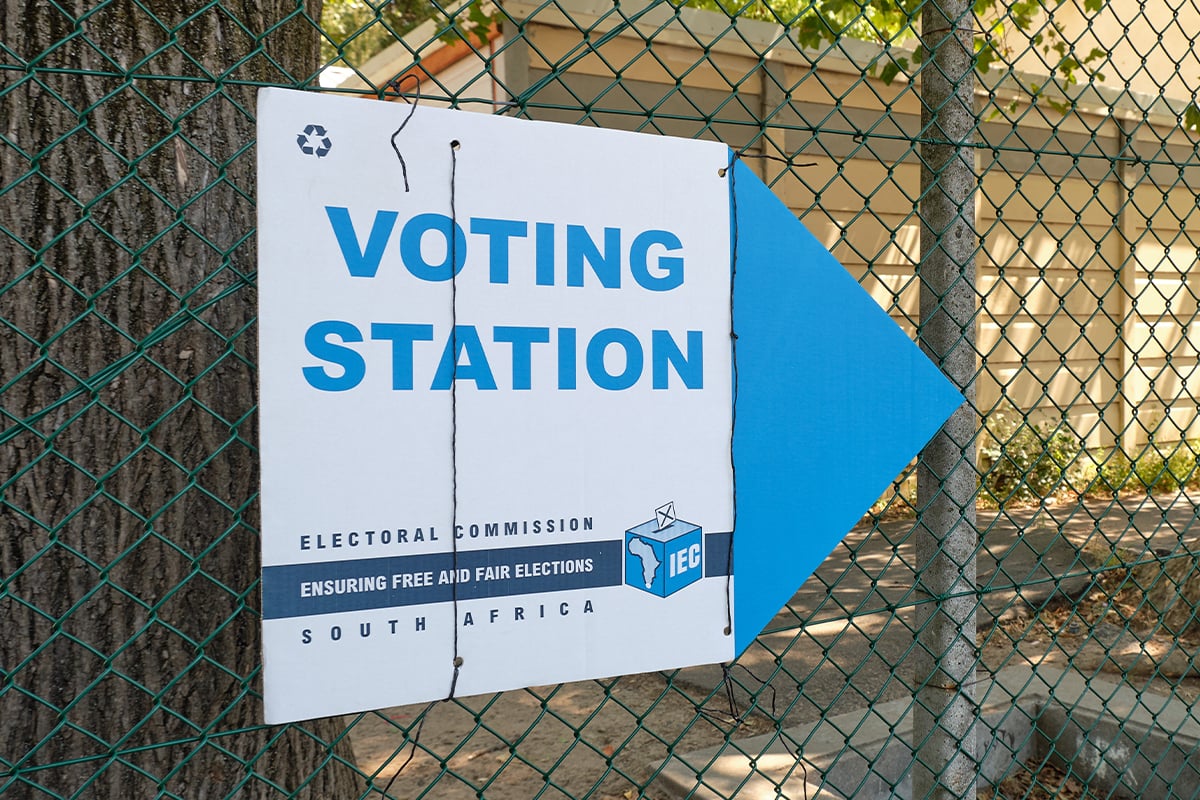
The Independent Electoral Commission (IEC) wants to discuss the possibility of electronic voting (e-voting) in South Africa’s future elections.
The country will hold an e-voting conference between Monday, 10 March, and Wednesday, 12 March 2025, in Cape Town for stakeholders to debate such a system’s feasibility.
Election management bodies and electoral authorities from countries that have implemented e-voting technologies will attend the conference.
Speaking to SABC News, IEC chief electoral officer Sy Mamabolo said the conference will include early discussions about e-voting in South Africa.
“The conference is making an inquiry. It’s going to be debating those issues such as are we ready? Does the digital infrastructure in the country lend itself to this kind of implementation of e-voting?” said Mamabolo.
“National Treasury is going to be part of the debate to look at the affordability of implementing e-voting. These are very initial discussions about the feasibility of e-voting in South Africa.”
“We are not straight-jacketing the country, but we think that the country cannot ignore the debate. Let’s get into the debate and see where it takes us,” he added.
Other countries that use e-voting include Estonia, India, Brazil, and the Philippines, while others that have tried have reverted to manual voting processes.
“We do expect these countries to give us their own experiences in terms of having tried e-voting and having had to stop, and what were the reasons that led to the situation where they had to stop the implementation of e-voting,” said Mamabolo.
He added that he expects countries that have successfully implemented e-voting to share insights about the benefits and how they address obvious pitfalls within the e-voting space.
Implementing e-voting would eliminate the need for most South Africans to stand in long queues to cast their vote, as was the case with the 2024 general elections.

The long wait times experienced during the 2024 general elections resulted in renewed calls for an online voting system for South Africa.
“The IEC should seriously consider implementing electronic online voting systems,” said DJ and radio presenter Jack Lekgothoane.
“It’s time to move away from traditional paper-based voting processes. Online voting can eliminate the need for printing ballots and manual hand counting. Embracing digital voting is the future.”
Countries like Estonia, India, Brazil, and the Philippines that have successfully implemented e-voting appear to be exceptions.
Many others, including Finland, Germany, Ireland, Kazakhstan, Norway, and the Netherlands, have tried and failed.
Developing a web application for South Africans to cast their votes may seem like a simple project. However, this is far from the reality.
Everything from programming errors to malicious actors must be considered when developing electronic voting systems.
According to cryptographer and computer security expert Bruce Schneier, adding computers to the mix only increases the places where mistakes and attacks can happen.
While electronic systems can boost scalability and speed, computers introduce new classes of problems regarding ensuring accurate results and preserving voter anonymity.
A famous example is Belgium’s 2003 federal elections, where a candidate received 4,096 extra votes due to a system error.
Investigators found that a bit flip caused the error — a single bit of memory was spontaneously flipped from 0 to 1, causing the error.
It was only detected because the glitch caused a mathematically impossible election result under Belgium’s system.
The error was believed to be caused by cosmic rays hitting the computer’s memory chip precisely in the right way, which the election system had no protection against at the time.
It should be noted that modern error correction code memory helps protect against these kinds of glitches.